Larry Zhou’s numbers game: less guesswork, more golf
At Alameda Precision Golf, Larry Zhou brings an athlete’s enthusiasm and a data professional’s curiosity to the swing. The goal: give golfers something they can see, understand, and take back to the range.
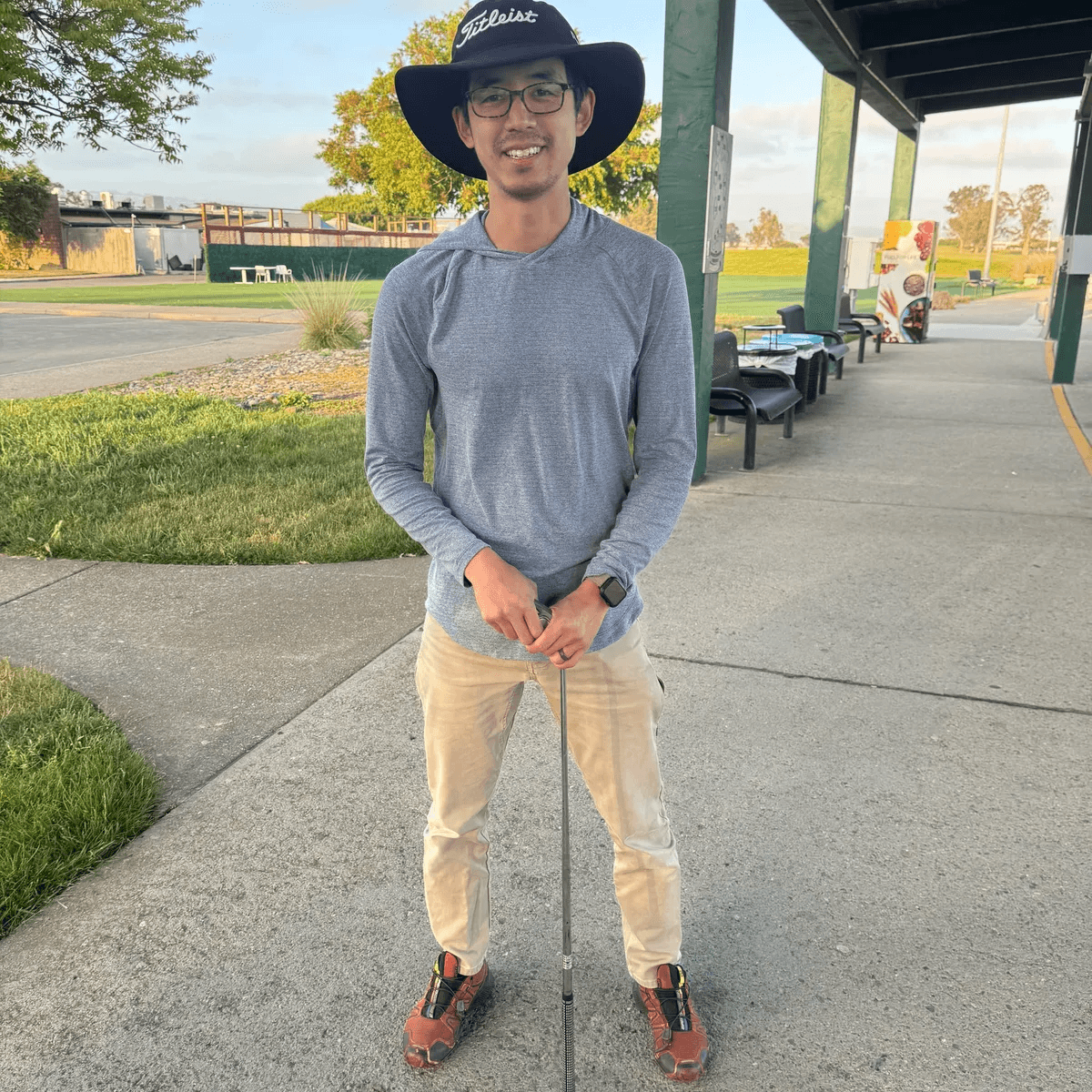
Larry Zhou, the coach behind Alameda Precision Golf. Source: Larry Zhou’s website.
Article contents
Meet the coach
Larry Zhou · Alameda Precision Golf · Alameda, CA
Larry Zhou is an Alameda golf coach who uses video and data to make the swing easier to understand — and practice easier to focus.
Golf has a remarkable ability to make a reasonably coordinated adult feel as if they have borrowed someone else’s arms. One swing feels terrific. The next sends the ball into a different ZIP code. Both, somehow, felt exactly the same.
After 15 years away from the golf industry, Cincinnati PGA professional Chris Candelaresi is back doing what he loves. But what stands out most is how much he genuinely enjoys helping people play better golf.
At 24 Precision Golf in Phoenix, Eric Brasch combines decades in the game with video, simulator data and a simple goal: help golfers understand their swings and enjoy the golf they play.
Larry Zhou loves getting into that gap.
Zhou, who teaches at Alameda Precision Golf, has a data professional’s brain, a former college swimmer’s competitive streak, and a soft spot for the moment a student finally gets it. Give him swing video and ball-flight numbers and he has plenty to dig into.
The assignment he wants you to take home is mercifully short: two or three things to practice.
Even in a sport capable of eating an entire Saturday, there is something deeply appealing about knowing where to start.
Tiger, a broken collarbone, and a teaching bug
Like plenty of golfers who came of age during the Tiger era, Zhou caught the bug early. He has been playing for more than 20 years.
His competitive golf ambitions took a hit in high school, when a broken collarbone helped send him toward another sport. He turned his attention to swimming and competed through college.
Golf found its way back into the picture at New York University. Zhou began teaching introductory lessons through the school. One season was enough. He was hooked on helping other people figure this game out.
“I love seeing my students unlock that ah-ha moment in their swing,” he says.
That little breakthrough is one of golf’s great pleasures. A movement that felt impossible starts to make sense. Suddenly, you want another bucket.
Zhou later stepped away from coaching. When he returned over the last few years, golf’s toolbox had expanded. High-speed cameras, ball data, and body-motion analysis had become much more accessible.
For someone who describes himself as a data person professionally, that was an invitation to go deep.
There is an athlete in there, too. Ask which part of the game he loves helping golfers improve and he goes straight to driver and swing speed. He enjoys connecting the physical work of training with the prospect of more distance.
The numbers guy also wants to let the big dog eat.
Show me the swing
Zhou’s description of his teaching is refreshingly direct: expect “a very data-heavy and visual approach.”
He uses FlightScope to examine ball metrics and Sportsbox to study slow-motion video, angles, and body positions. A decade ago, he relied mostly on his eyes and video. Now he has more ways to see what a golfer is actually doing.
Anyone who has watched a recording of their own swing knows the potential here. The swing in your head can be a gorgeous, flowing thing. The one on your phone occasionally has other ideas.
Zhou tracks what he can so students can see changes and understand what they are working on. For golfers who like visual explanations, there is plenty to work with: the motion, the ball flight, and how the two connect.
His enthusiasm for the tools comes with a clear-eyed view of the work.
“Golf is hard. Change takes time.”
A reassuring thing to hear from someone with all that technology at his fingertips. You still get to be a human learning a difficult game.
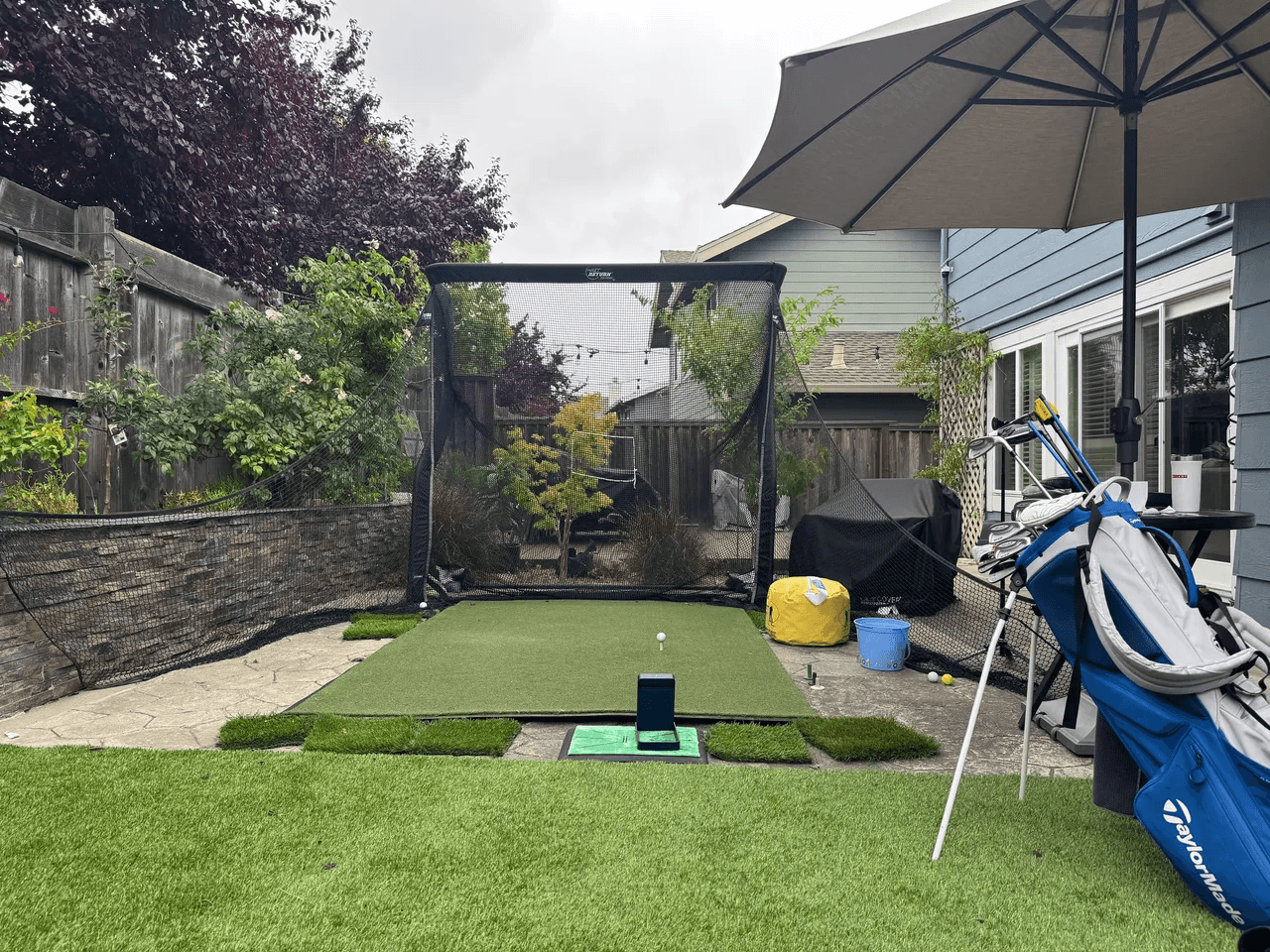
A net, a mat, and a launch monitor: an outdoor practice setup shown on Zhou’s website. Source: Larry Zhou’s website.
A first lesson with a game plan
Zhou starts by taking plenty of video. Before choosing a priority, he wants a baseline.
He aims to work through as much of the bag as practical: short, middle, and long irons, then woods and driver. He is looking for the bigger issues that may be affecting more than one part of the swing.
That gives the session a direction and the golfer a place to put their attention.
The follow-up may be the most useful part.
Zhou sends a summary using the student’s FlightScope data, along with a short list of things to practice before the next lesson.
Anyone who has ever left a lesson thinking, “I will definitely remember all of that,” can appreciate a written reminder.
Golf already asks you to keep track of enough things. Where the ball went, for starters.
Zhou wants students to leave with two or three clear priorities they can carry into the following weeks. Something concrete to return to when they are standing over the next bucket on their own.
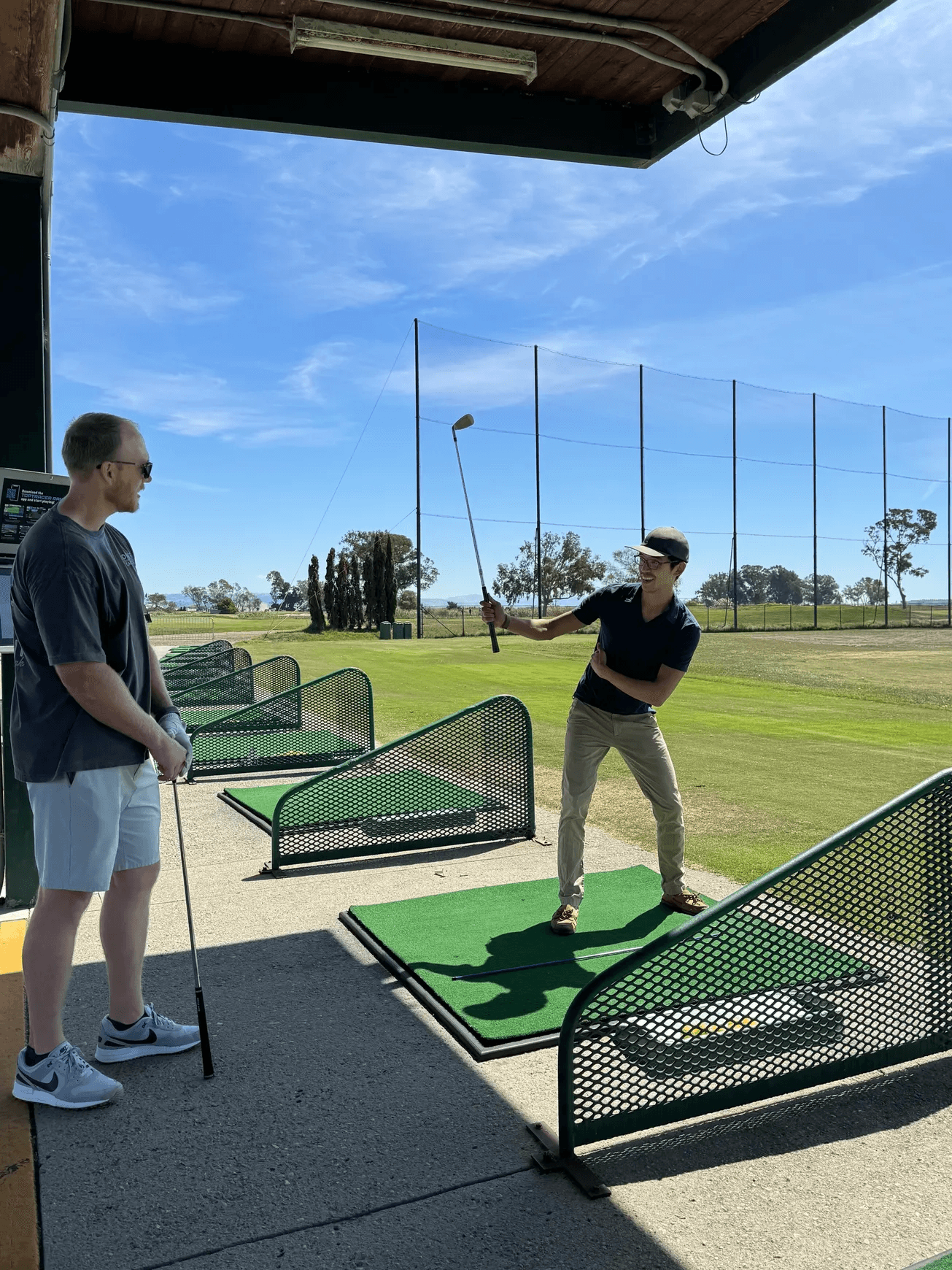
Zhou demonstrates a swing as a student watches at the range. Source: Larry Zhou’s website.
Three questions with Larry
What have you changed your mind about as a coach?
“We all don’t have to swing like Tiger.”
A welcome permission slip from a golfer who grew up in the Tiger era.
You can love watching that swing without making a replica of it your life’s work. There is room in this game for yours.
Who do you most enjoy coaching?
“I love coaching beginners, juniors, and intermediate players.”
Zhou enjoys the leaps beginners can make as they learn the basics in sequence.
With intermediate golfers, there is often a more specific puzzle to solve and a shared vocabulary to work with. He likes seeing weekend golfers gain confidence in where their swing is headed.
You do not need a tournament schedule to care deeply about getting better.
What makes golf fun when it is being ridiculous?
“There are no shortcuts on a golf course and everyone is treated with the same challenge on the golf course. It’s really just you and the course.”
His favorite local place to take on that challenge is Corica. He lives nearby and freely admits some bias.
A favorite course close to home is a pretty good argument for arranging your life around golf.
Give the next swing a chance
Zhou asks students to bring an open mind.
A swing takes time to change. He wants golfers to stay with the work long enough to give it a chance.
That patience can be easier to find when you understand what you are practicing. A video to revisit. A few priorities in writing. Something specific to try when you pick up a club again.
Zhou’s approach is not about turning your golf swing into a spreadsheet.
The numbers are there to make the problem clearer, the practice simpler, and the next swing a little less mysterious.
For golfers who like seeing what they are doing — and leaving a lesson knowing what to work on next — that can be a pretty useful place to start.
“We all don’t have to swing like Tiger.”
Larry Zhou
Alameda Precision Golf · Alameda, CA
Explore Larry Zhou’s coaching
Beginners, juniors, and intermediate golfers.
Visual coaching using swing video and ball-flight data, with two or three focused practice priorities between lessons.
This feature is based on a written interview with Larry Zhou. Answers and quotations have been lightly edited for clarity and length with his permission.
Disclosure
Larry Zhou has a coaching profile on BirdieYard. Featured Coaches is an editorial series about the people behind the lessons.
From a backyard net to Perform for Golf in San Rafael, Dylan Smith has kept the same aim: help golfers understand their swings. His RBFS system starts with four movements: turn, tilt, bend and sway.