The Practice · Choose
How to choose a golf coach who fits your goals
A practical way to compare coaching goals, communication, credentials, logistics, and the first-lesson experience without chasing the flashiest profile.
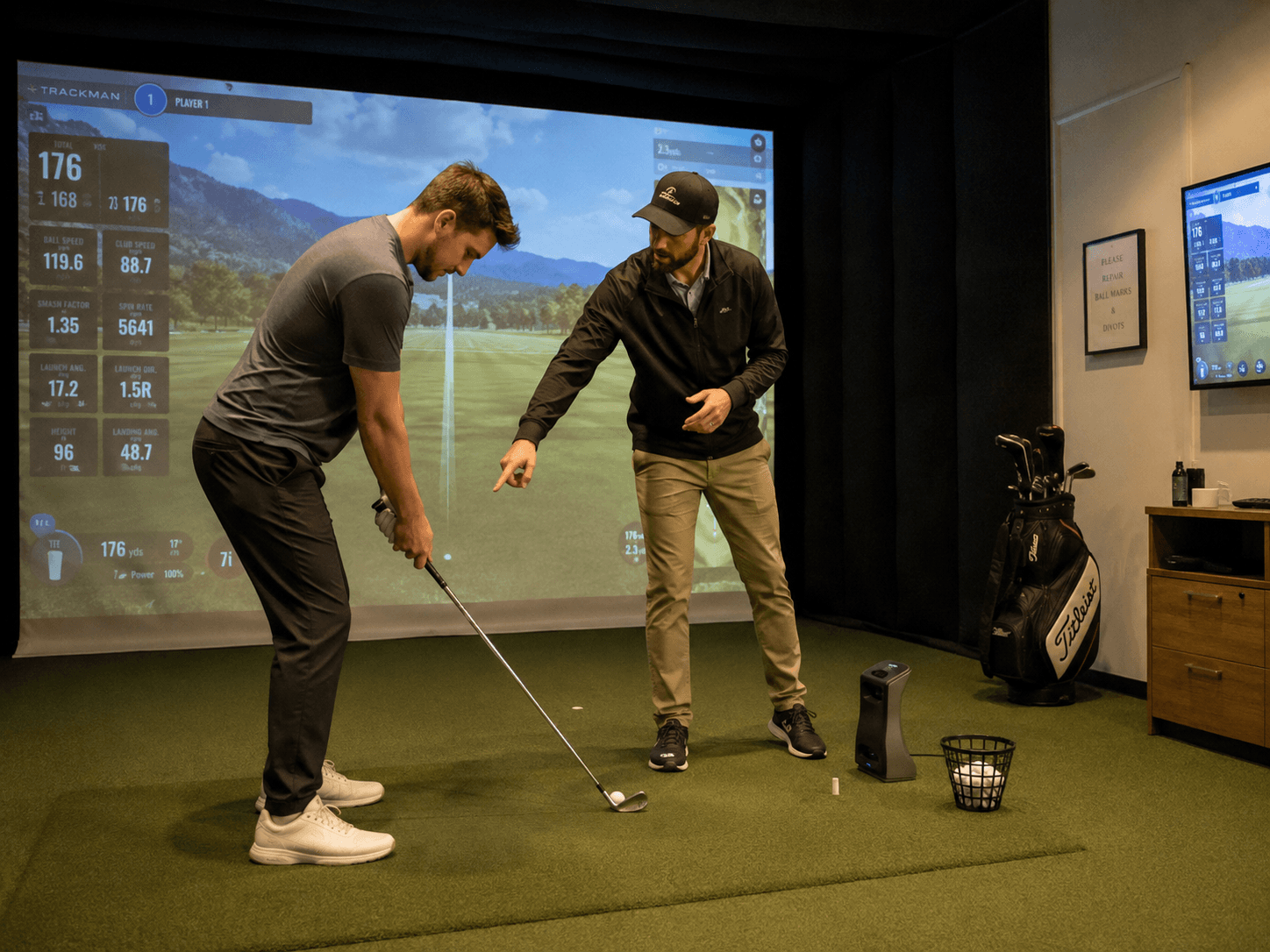
The Practice · Choose
A practical way to compare coaching goals, communication, credentials, logistics, and the first-lesson experience without chasing the flashiest profile.
Choose a golf coach by matching four things: your goal, the coach’s relevant experience, a communication style you can use, and lesson logistics you can sustain. Verify credentials and profile claims, ask the same questions of each coach, and use one clearly scoped lesson to test fit before making a larger commitment.
You can open two golf-coach profiles and end up knowing more about their technology than about how either person would teach you. One coach lists launch monitors, certifications, and tournament experience. Another says they welcome beginners and help with short game. Both may be capable. Neither profile, by itself, tells you which relationship fits your goal.
Coach fit is not a hunt for the most impressive biography. It is a match between the problem you want to solve, the way a coach communicates, the lesson format you can actually use, and the work you are willing to do between sessions.
“Get better at golf” is too broad to guide a useful search. Before comparing coaches, write one outcome you want help with over the next few weeks or months. It can be modest: feel prepared for a first round, stop guessing during short-game practice, understand a recurring driver miss, or build a plan for tournament preparation.
Then complete a four-part goal-to-fit card:
The card is not a diagnosis. It gives you a consistent way to compare coaches without letting one polished profile decide the whole search.
The current PGA of America coach search lets golfers begin with categories such as youth, beginners, improvement, and groups. The LPGA Professionals directory provides a separate way to find certified LPGA teaching professionals. Those directories can help verify an organization-specific credential and narrow the field. They cannot guarantee that a coach’s communication, availability, price, or lesson structure will suit you.
Fit is not a soft extra. The PGA of America’s professional-training outline includes building useful coach-golfer relationships, adapting communication to the golfer, assessing instructional needs, and setting clear learning and practice goals. That is a training standard, not evidence that every credentialed coach uses the same approach, but it identifies reasonable things to ask about.
Useful profile signals include relevant experience with your type of goal, a clear description of lesson formats, verifiable qualifications, specific facility information, and an explanation of what happens after a lesson. A large social following, expensive technology, a long playing résumé, or a dramatic result claim may attract attention, but none proves that the teaching relationship will fit you.
A PGA of America guide to choosing a coach recommends considering compatibility, goals, referrals, price, location, experience, and an introductory conversation. It is first-party editorial guidance rather than independent research, so use it as a question starter, not a universal ranking system.
Ask each coach the same six questions:
You are not looking for one approved script. Listen for whether the answers are specific, whether the coach asks about your goal, and whether the promised support matches what you can use. A coach who prefers concise demonstrations may fit one golfer well and frustrate another. That difference is fit, not a verdict on the coach.
If the conversation is promising but you are unsure, start with one lesson rather than treating a package as the price of finding out. Tell the coach the goal from your card and ask what a useful first session can realistically cover.
Afterward, check the relationship with five questions:
A lesson can be technically knowledgeable and still be the wrong working relationship. It can also feel unfamiliar without being wrong. Judge the concrete things: clarity, relevance to your stated goal, respect for your questions, and whether you understand what comes next.
Put your notes into three columns before you choose:
A credential can verify training within an organization. Experience can show familiarity with a type of golfer. Technology can make feedback clearer. Each may matter; none replaces the conversation and first-lesson check.
Use the goal-to-fit card to shortlist a few coaches, ask the same six questions, and test the relationship with one clearly scoped lesson. Choose the coach who can connect your actual goal to a lesson and practice process you understand—not the profile that asks you to infer the most.
No. A relevant credential can show that a coach completed specific training, but it does not guarantee that their communication style, lesson format, location, or pricing will fit your needs. Verify the credential and evaluate the rest separately.
You can start with one clearly scoped lesson if you want to test the fit before making a larger commitment. Afterward, decide whether the coach's feedback, communication, logistics, and recommended next step work for you.
Ask who they typically coach, how they would approach your goal, where the lesson happens, what the full price includes, what you should bring, and what happens after the session.
A useful first lesson should leave you with a clear priority, an understandable reason for working on it, and a practical next step. You should also feel that your questions were respected and that the cost and logistics are workable.
Prepared as a source synthesis from current PGA of America and LPGA directories, PGA professional-training materials, and first-party coach-selection guidance. No coach interview, golfer survey, systematic profile audit, or lesson test was performed.
Read our editorial standards and corrections policy.
Start
Breakfast balls, mulligans and a little mercy for terrible lies. The Jared Rules make casual golf more fun—as long as everyone knows the deal.
Improve
A beginner’s first useful score is a trustworthy hole score—not necessarily an 18-hole total. Here is what to count, what to write, and when to put the pencil away.
Featured Coaches
At Alameda Precision Golf, Larry Zhou brings an athlete’s enthusiasm and a data professional’s curiosity to the swing. The goal: give golfers something they can see, understand, and take back to the range.