The Practice · Start
What golfers actually mean when they say “keep pace”
Pace of play is less about rushing a swing than keeping your group moving, staying ready, and knowing when a local policy sets the clock.

The Practice · Start
Pace of play is less about rushing a swing than keeping your group moving, staying ready, and knowing when a local policy sets the clock.
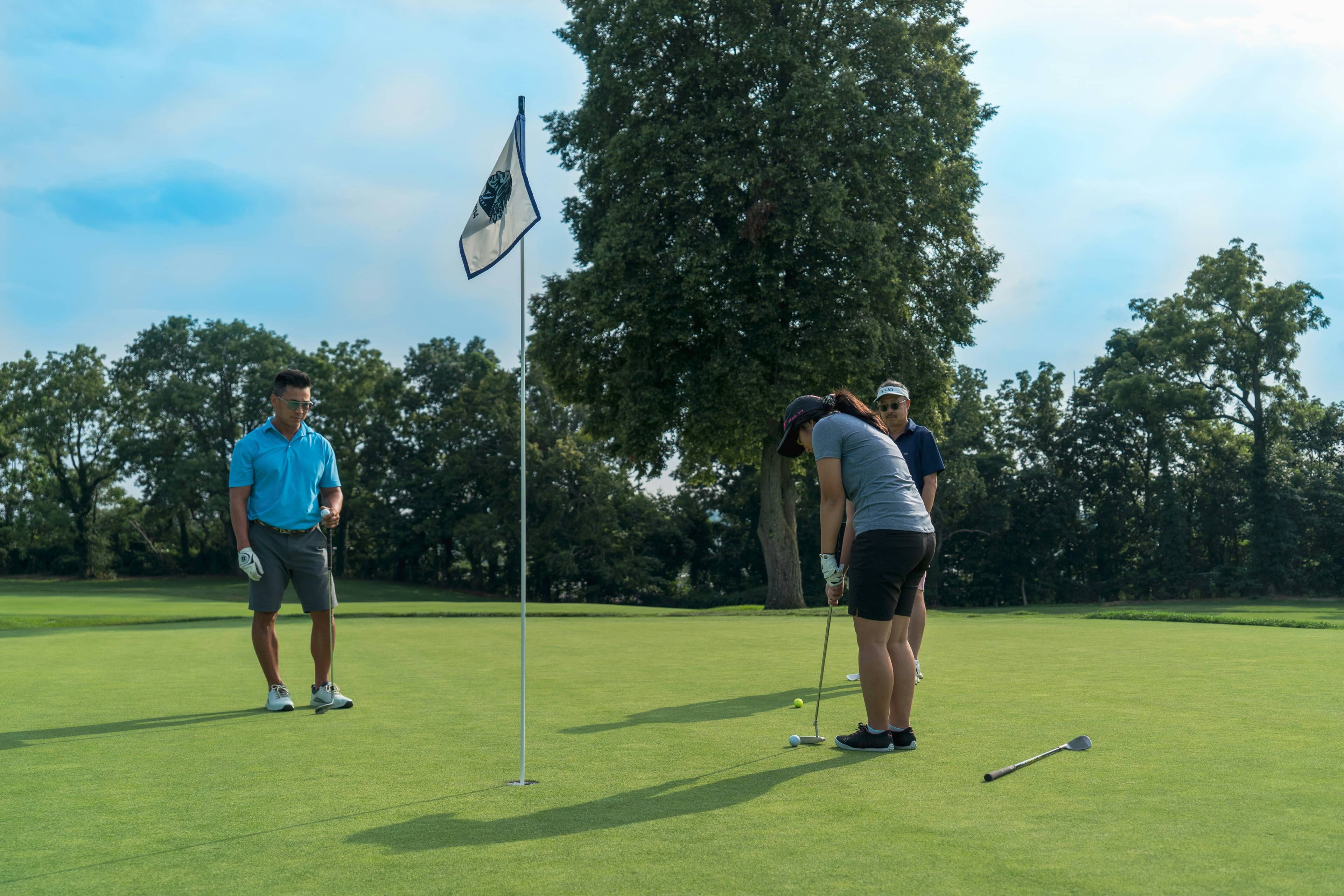
“Keep pace” means helping your group maintain its place on the course without rushing an unsafe or unready shot. Watch the group ahead, prepare while others play, move efficiently between shots, and clear each green promptly. The Rules include a 40-second recommendation for a stroke once you can play, while courses and competitions may set their own pace policies.
A golf group rarely loses ten minutes in one dramatic event. It loses twenty seconds while someone walks back to the cart for a different club, another twenty while four people begin looking for the same ball at four different times, and another minute while the scorecard receives a full accounting on the edge of the green. Slow play is usually loose change. It becomes expensive in a pile.
That’s why “keep pace” is easy to misunderstand. It doesn’t mean swinging before you feel safe, jogging between shots, or apologizing for being new. It means knowing where your group belongs and removing delays that don’t help anyone play better.
The useful reference is the movement of the course ahead of you, interpreted with any local pace standard. If your group is repeatedly waiting for the group in front to clear, you’re moving with play even when the group behind is close. If open space keeps growing ahead while nobody is waiting on you, your group may have lost position. But don’t turn an exceptionally fast single or twosome into a private time trial; any posted pace and staff direction settle that edge case. One impatient posture in the fairway is not a pace policy.
The R&A puts prompt play inside the broader duty to show consideration to other golfers and says priority on the course is determined by a group’s pace of play. That wording matters: pace belongs to the group. A beginner can hit more shots and still contribute to good pace by staying ready. A low-handicap golfer can hold everyone up with a long routine, poor awareness, or a bag left on the wrong side of every green.
You don’t have to look hurried. Notice whether the group is moving continuously. Golf includes unavoidable waiting: players ahead must move out of range, another golfer needs room to play, and a ball occasionally requires a reasonable search. Good pace removes the avoidable waiting around those moments.
The Rules guidance recommends making a stroke in no more than 40 seconds after you are able to play without interference or distraction. The phrase “after you are able to play” does real work. The clock is not permission to hit toward people, crowd another golfer, or skip a necessary Rules decision. It is a reminder to begin the useful thinking before your turn arrives.
There are two pace questions. One concerns your turn: once it is safe and possible to play, are you reasonably ready? The other concerns the group: are you maintaining position through the hole and into the next one? A golfer can meet the first test and still lose time through slow transitions. A group can also take longer on one difficult hole without becoming a slow group if it closes the space again responsibly.
| Pace question | What to notice | What sets the standard |
|---|---|---|
| Are you ready for your turn? | Whether the useful preparation begins before the turn | Rules guidance plus the conditions of the shot |
| Is your group maintaining position? | Whether open space is growing ahead when play is clear | The course, event, format, and conditions that day |
Don’t turn the table into a private stopwatch. Its purpose is diagnostic. If the group is in position, keep playing. If the gap is growing, save time where the game gives it back most cheaply.
Watch every ball finish, especially your own. Move toward your ball when it is safe. As another golfer prepares, gather the information you can without distracting them: distance, wind, lie, likely club, and the safe place to miss. If you must walk away from a cart, take the two clubs that cover the decision instead of making a second trip after discovering that golf has once again produced an in-between number.
Around the green, place your bag or cart on the route toward the next tee when the course allows it. Study your putt while others play, without standing in a distracting place. When the hole is finished, clear the green first and record scores where the next group does not need the ground beneath your shoes.
You don’t need a shorter backswing, fewer practice motions than you genuinely use, or a sprint. You need attention. The slowest part of many shots is not the swing; it is the moment when a golfer’s turn arrives and the golfer begins acting surprised that a turn has arrived.
Beginners sometimes respond to a growing gap by rushing the next swing. That can create another ball to find and another decision from trouble. Keep the swing safe and familiar. Recover time through the group’s transitions: watch the shots, move together, bring the needed clubs, and make the next simple decision without a meeting.
In a purely casual round, the group can agree before or during play that a golfer may pick up, move forward, or stop keeping an official-style score when a hole stops being useful. That is a learning format, not a Rules shortcut. BirdieYard’s first-nine guide explains how to make that agreement without pretending the result is an official score.
If the score counts for a competition or handicap purpose, don’t invent a casual escape hatch. Ask the organizer, starter, or another appropriate official what applies. Pace does not cancel the Rules, and the Rules do not require a beginner to answer every unfamiliar situation alone.
The R&A notes that a committee may adopt its own Code of Conduct as a Local Rule and attach penalties to it. Courses and events can also communicate their own pace expectations and procedures. That is why a number remembered from another course is not a universal command here.
Read the scorecard and signs, listen to the starter, and follow staff direction. If you are uncertain at check-in, ask one useful question: “What pace do you expect, and what should our group do if we fall out of position?” That separates an actual local standard from advice delivered by a stranger who has appointed themselves deputy marshal.
The same distinction applies when a faster group is waiting behind. Don’t create an unsafe pass or a traffic jam out of embarrassment. Communicate with your group, follow the course’s process, and ask staff when the right move is unclear.
A group with good pace doesn’t necessarily look athletic. It looks connected. Golfers watch one another’s shots, move when it is safe, arrive at their balls with a plan, and leave the green in the direction of the next hole. Nobody needs to narrate the efficiency because nobody is waiting for it to begin.
That is the humane meaning of “keep pace.” Play the shot with the care it deserves. Give the empty time around it much less ceremony.
No. A fast single or twosome can pull away even when your group meets the course’s expected pace. Treat the gap as a signal, then consider any posted pace and staff guidance. If your group is repeatedly waiting for the players ahead, a close group behind alone does not prove you are slow.
The Rules guidance recommends making a stroke within 40 seconds after you are able to play without interference or distraction, and usually sooner. A course or competition may use a separate pace policy, so check the local standard rather than treating 40 seconds as the entire round clock.
In a purely casual learning round, the group can agree that a golfer may pick up or move forward when a hole stops being useful. If the score counts for a competition or handicap purpose, follow the applicable Rules and ask the organizer what to do.
Possibly, but do not improvise an unsafe pass. Communicate with your group, follow the course’s stated process, and ask staff when the correct move is unclear. A close group behind does not automatically mean your group is slow if everyone is waiting on play ahead.
Read our editorial standards and corrections policy.
Start
A reason-first guide to staying safe, keeping pace, protecting another golfer’s concentration, and leaving the course ready for the next group.
Start
A calm guide to arriving prepared, staying safe, keeping pace, and enjoying nine holes without treating every score as permanent evidence.