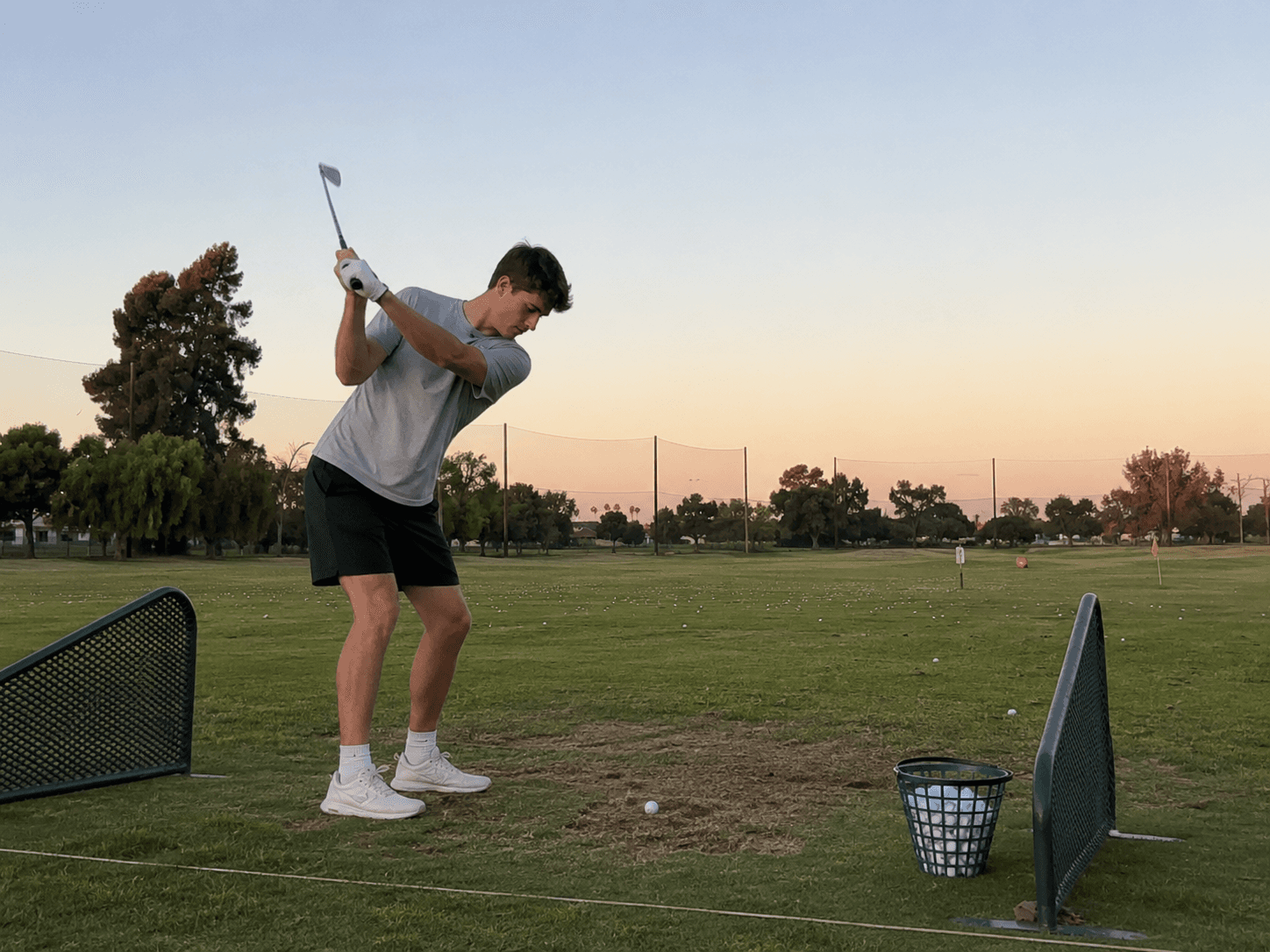
Before you chase quick fixes, build a foundation. Solid setup, balance, and consistent contact matter more than copying complicated swing tips.
Article contents
The short answer
Before chasing swing fixes, learn to practice safely, choose a clear target, work on one task at a time, and watch one result you can describe. Grip, posture, alignment, and movement advice still matter, but an article cannot diagnose which change fits your body, shot, and goal.
A beginner practice session can become five different swing projects before the tenth ball. One tip changes the grip. Another changes posture. A third asks for more turn. The golfer keeps working, but there is no clear way to tell which idea helped.
The better starting point is not a perfect-looking swing. It is a small set of foundations that make practice safe, focused, and observable. Movement changes come after that structure—and often need individual feedback.
A tee is a setting for the round, not a rank or a gender label. Understand forward tees and “the tips,” then choose for your game, the course, and the golf you want to play.
The right golf travel bag fits your clubs, airline, car, storage space, and appetite for risk. Use four checks before hard-versus-soft marketing makes the choice for you.
Make the practice area safe before making it technical
Before any stroke or practice swing, check that nobody is close enough to be struck by the club, ball, or loose material. That is the safety standard stated in The R&A’s guidance on the spirit of the game. At a range or practice area, also follow the facility’s signs, ropes, hitting-line rules, and instructions.
This is the first foundation because it does not depend on swing style. Grip, posture, ball position, and motion can vary. A clear hitting area cannot.
Choose a target before choosing a fix
A shot without a target gives you very little information. You can see that the ball flew, but not whether it started near the line you intended or finished in a useful place.
PGA of America range guidance recommends choosing specific targets and giving a session one main focus. The advice is practical rather than a universal training law, but it establishes a useful order: decide where the ball is meant to go, then decide what you are working on.
For a beginner, the target does not need to be ambitious. It might be a broad section of the range, a spot on the putting green, or a landing area for a short chip. Pick it before you set the club behind the ball. You are building the habit of connecting a swing to an intended shot.
Learn the shape of the game, not only the full swing
The PGA of America Coaching Center’s beginner program describes beginner instruction as a mix of swinging, chipping, putting, etiquette, and basic rules. Its sequence begins with an assessment and goals, followed by a plan, guided practice, and progress tracking.
That is one facility’s program, not a required curriculum for every beginner. The useful distinction is broader: golf is not a driving-range contest. A beginner needs some exposure to getting the ball in the air, moving it around the green, rolling putts toward a target, and behaving safely and considerately where other people are playing.
You do not need to practice every part of the game in every session. You do need to know that a full-swing miss is only one part of learning golf. If every practice bucket becomes a search for a prettier driver swing, the rest of the game never gets a chance to become familiar.
Give one practice session one job
PGA professional-training materials for a beginning-level lesson say the opening interview should narrow the lesson objectives and note that only one to three topics should normally be discussed. The same materials include student objectives, observation, practice assignments, and closing questions. That supports a focused lesson structure; it does not tell an unseen golfer which movement to change. The training outline is available from the PGA of America.
Use the same narrowing principle between lessons. Before you begin, fill out a four-line practice card:
Where: the putting green, short-game area, or range bay you will use.
What: one task from your coach or one non-diagnostic skill, such as starting putts toward a chosen spot.
Watch: one visible result, such as start direction, finish location, or whether contact matched the task.
Write: one question to carry into the next lesson if the result is confusing.
The card is not a scoring system and it does not diagnose a swing. Its job is to stop a session from turning into several unrelated experiments.
Know where general advice ends
Grip, posture, alignment, and balance are commonly called fundamentals because they influence the conditions around a shot. That does not make one photographed position correct for every golfer, club, body, target, or intended ball flight.
A general article can help you create a safe practice environment, choose a target, narrow the task, and record what happened. It cannot see whether your grip change caused the ball flight, whether a posture cue fits your mobility, or whether the same miss has a different cause from one swing to the next.
When a tip asks you to move a body part, change the clubface, or solve a recurring ball flight, treat it as a question for individual feedback rather than the next item in a growing checklist. Bring the result you observed, the target you chose, and the question you wrote down. That gives a coach something more useful than “my swing feels wrong.”
A beginner foundation checklist
Before a practice swing, confirm the hitting area is clear and follow the facility’s rules.
Choose a specific, realistic target.
Choose one part of the game and one job for the session.
Watch one result instead of judging how the swing looks.
Write down what happened and one question that remains.
Leave movement prescriptions for a coach who can see the golfer, shot, and goal together.
Use that checklist for your next short practice session. The win is not finding a permanent swing fix. It is leaving with a clearer picture of what you tried, what the ball did, and what deserves attention next.
Frequently asked questions
What should a beginner golfer practice first?
Start with safe setup and awareness, choose a clear target, and work on one manageable task with an observable result. The goal is to build a repeatable practice habit, not to create a perfect swing immediately.
How many swing changes should a beginner work on at once?
Keep the practice session narrow. One clear priority is usually easier to understand, repeat, and evaluate than several unrelated changes at the same time.
When should a beginner stop following general swing tips?
General advice reaches its limit when you need an individual diagnosis of how your movement or clubface is affecting the ball. At that point, direct feedback from a qualified coach can help you choose a safer and more relevant next step.
How this article was prepared
Prepared as a research synthesis from current R&A safety guidance, PGA of America beginner-program information, PGA professional-training materials, and PGA range-practice guidance. No coach interview, individual swing diagnosis, or hands-on test was performed.