The Practice · Start
Do you need your own clubs before a golf lesson?
You can often start a golf lesson with clubs you own, borrow, or receive from the facility. Confirm the policy before buying a set just to arrive prepared.

The Practice · Start
You can often start a golf lesson with clubs you own, borrow, or receive from the facility. Confirm the policy before buying a set just to arrive prepared.
You do not always need your own clubs before a golf lesson. Ask the coach or facility whether loaner or rental clubs are available, whether left- or right-handed options are limited, and whether the lesson requires a particular club. Bring any clubs you already own if requested. Buy only when you understand what you will use after the lesson.
A new set of golf clubs is excellent at solving one problem: not owning a set. It cannot tell you whether your first lesson requires one.
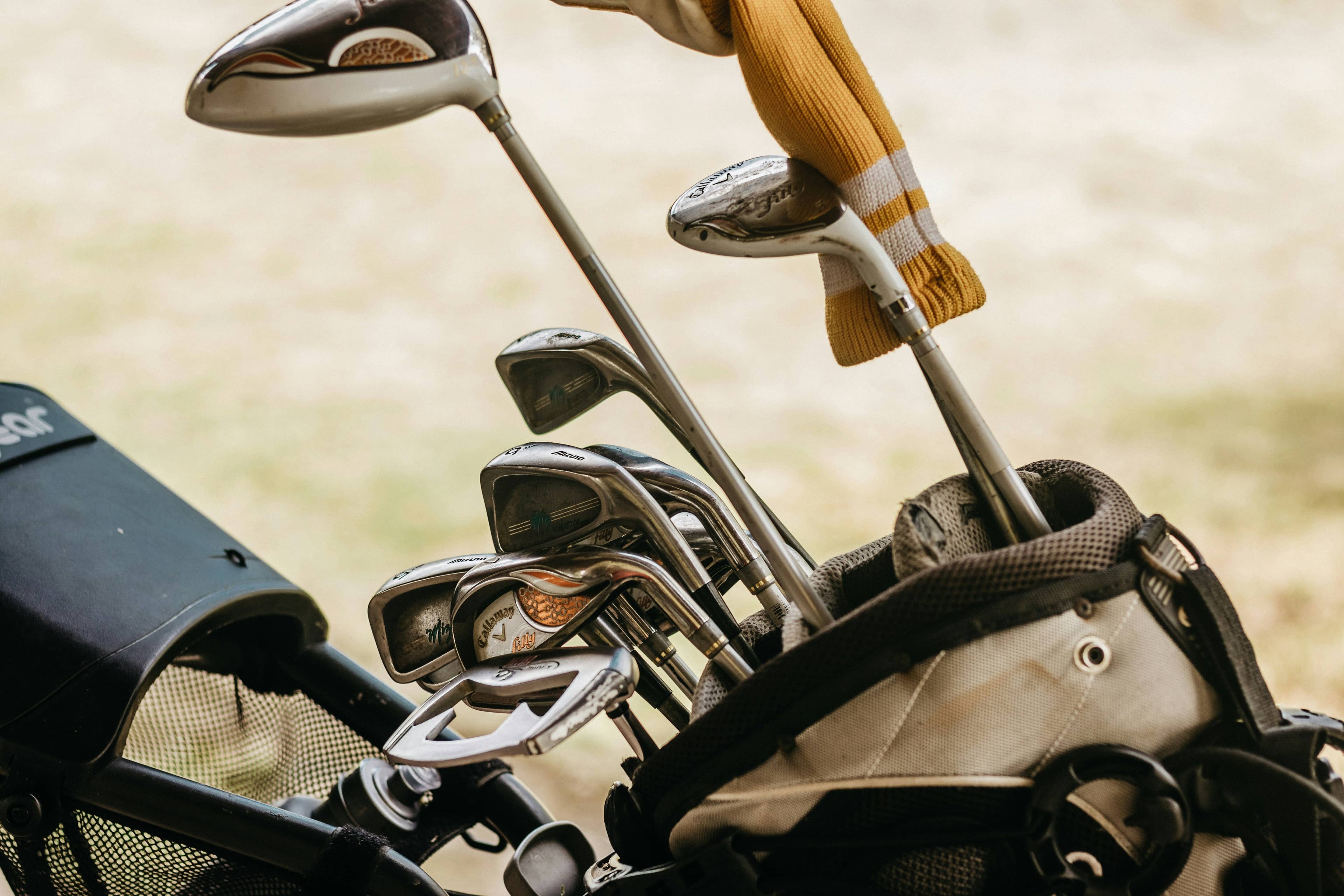
The bag looks like admission to the game. Fourteen spaces, several headcovers, an alarming number of nearly identical irons. But a lesson is not a bag inspection. The useful question is whether the coach can run the session with equipment that suits the place and the work—not whether you arrived looking fully stocked.
Being ready for a lesson means knowing where to go, what the session includes, and which clubs will be available. Being ready to buy means knowing what you expect to play or practice, how often, and what kind of equipment will be useful beyond one hour. Those decisions may happen together. They do not have to.
One current program shows why a universal answer would be misleading. The PGA of America Coaching Center provides rental clubs for its beginner classes, welcomes golfers who bring their own, says rental availability is limited for more advanced classes, and requires golfers to own clubs for its on-course instruction. That is one facility's policy, not a national rule. It proves the practical point: the answer can change with the lesson format even at the same place.
Do not buy a full set merely to avoid asking a basic question. Ask first. The answer may save money, but more importantly, it tells you how the lesson actually works.
Old clubs, inherited clubs, a half-set, or the few clubs a friend gave you are not automatically disqualifying. Tell the coach what you have and ask whether to bring them. A coach may want to see the equipment you expect to use afterward; they may also prefer to begin with a different club for the lesson's purpose. Let that be a coaching decision instead of trying to solve it from a product shelf.
Describe the set plainly. Mention whether you swing left- or right-handed, which clubs are present, whether anything is damaged, and whether the clubs feel unusually long, short, heavy, or difficult to hold. You do not need to diagnose the fit. You are giving the coach enough information to say, “Bring them,” “Leave them home,” or “We will use something here.”
This is also a useful limit on the article: nobody can confirm unseen equipment for an unseen golfer. If a club is damaged, creates pain, or seems unsafe, stop using it and ask the coach before the lesson.
“Do you have loaner clubs?” is a good opening question. It is not the whole question. Confirm that clubs are available for your specific lesson, not merely somewhere at the facility. Ask whether there is a fee, whether supply is limited, and whether the available set matches the side you swing from. A right-handed adult set in the equipment room does not solve a left-handed golfer's problem.
For a group class, ask whether clubs are assigned to each golfer or shared during the session. For an on-course lesson, ask whether temporary clubs are allowed and whether you need a bag. For an indoor session, ask which clubs the coach expects to use. These are examples of details to confirm, not promises about how facilities operate.
Equipment is one piece of first-lesson logistics. BirdieYard's guide to what to expect at your first golf lesson covers the meeting point, clothing, balls, timing, and the other details worth settling before you leave home.
Buying before the lesson can make sense when the coach or facility has confirmed that you must bring clubs, you already know you will practice independently, or borrowing is not realistically available. Even then, you may not need every club sold in a boxed set. Ask what is necessary for the first session and what can wait.
Buying after the lesson can make sense when you want the coach's input, are unsure whether existing clubs are usable, or have not yet decided how you will practice. The lesson may clarify what kind of golf you are preparing for and which part of the bag matters first. That does not turn an ordinary lesson into a club fitting. If you want measurement, model comparisons, or a purchase recommendation, ask whether fitting is a separate service and what it includes.
The clean distinction is this: a lesson helps you start learning; equipment helps you keep playing and practicing. You are buying a way to use the next week, month, and season—not an admission ticket for the first hour.
Use what you have when the coach says it is suitable for the session. Bring the clubs as they are; there is no need to make the bag look complete.
Borrow or use facility clubs when availability is confirmed for that lesson and the equipment matches your basic needs. Confirm the details again if the lesson format changes.
Buy when ownership solves a known next problem: the lesson requires clubs, you need equipment for practice, or a temporary option is unavailable. If you cannot name the next use, waiting is a decision—not a lack of commitment.
Send one message before you shop: “I do not own clubs yet. Will clubs be available for this lesson, and do you need to know whether I swing left- or right-handed?” The answer tells you what to bring. It may also tell you whether buying anything today would solve a real golf problem or merely make the garage look ready.
Possibly. Tell the coach exactly which clubs you have and ask what the session requires. A lesson may use only part of the bag, but the coach and facility should confirm that your available clubs suit the planned work.
Bring them if the coach asks. Describe any missing or damaged clubs and anything that feels unusually long, short, heavy, or uncomfortable. The coach can then decide whether to use them, inspect them, or start with other available equipment.
Confirm that a left-handed set will be available for your exact lesson and ask which clubs it includes. Loaner supply can be limited, so do not assume a facility's general equipment policy guarantees the orientation you need.
Not unless the coach or facility explicitly says so. A lesson may reveal useful equipment questions, but measurement, model comparison, and purchase recommendations can be a separate service. Ask what your session includes before expecting fitting advice.
Start
A practical guide to the questions, observation, focused coaching, and next steps that may shape a first lesson—plus the details to confirm before you arrive.
Start
Private lessons concentrate the coach’s attention; group lessons add shared learning and often more structure. Compare the actual session, not the label.